Platform How it works

How Persona Dynamics works

Build grounded AI Personas from the evidence you already have, then use them to support clearer discussion and more confident decisions.

Six steps from evidence to insight

The Persona Dynamics process is designed to be clear at every stage, from what goes in to how outputs are generated.

1
Set up your personas' knowledge base

Bring together your research, reports, documents and expertise into a structured knowledge base your personas can draw on.

2
Identify relevant viewpoints

Define the personas, stakeholder perspectives or expert domains most relevant to your use case.

3
Build grounded personas

This platform creates personas grounded in your specific research.

4
Interrogate your personas

Ask questions, test concepts and explore ideas. Every response carries a confidence score and traceable sources, not a generic answer.

5
Review supporting evidence

See exactly which source material informed each response and evaluate its relevance.

6
Apply in workflow

Use insights in strategy, planning, product decisions or team alignment, wherever it matters most.

Start with the evidence you already have

You don't need to commission new research to get started. Persona Dynamics is designed to work with the knowledge your organisation already holds: research reports, survey data, documents, brand materials and specialist expertise.

Once your evidence is in the platform, you define the viewpoints you want to explore. These might be audience segments, customer types, stakeholder perspectives or expert domains, depending on your use case.

The quality of what comes out depends directly on what goes in. We support you in structuring and curating your evidence base to get the most from it. Where the evidence is thin, our facilitators flag the gaps and advise on what additional research would strengthen the personas, so quality is raised upstream rather than discovered later.

If you don't yet have the research you need, we can help with that too. We work with research partners and can support scoped primary research as part of a managed engagement.

Interrogate your personas

The platform builds personas directly from your evidence. These aren't synthetic constructs or generic AI outputs: they form perspectives from what your research actually says about a specific audience, domain or stakeholder group.

Once created, your team can interrogate them through structured conversation. Ask about reactions to a new concept, explore tensions between different perspectives, probe how a segment would respond to a particular message or ask for technical expertise.

Why is this different from asking a chatbot?

A chatbot draws on general training data and produces fluent approximations. A Persona Dynamics persona derives perspective from your research, so responses are backed by the evidence and are defensible to stakeholders, not just plausible guesses.
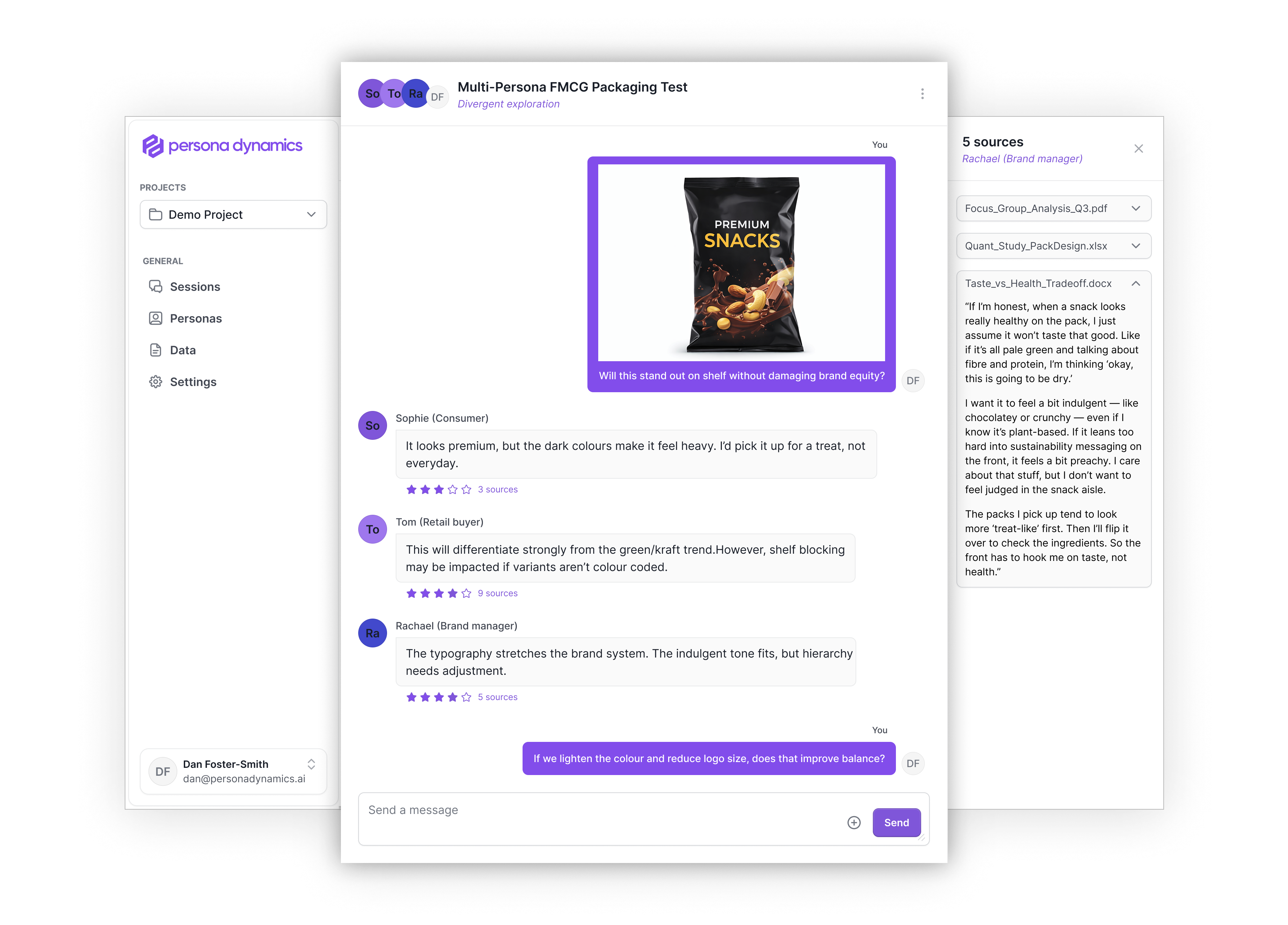
Multi-persona session in Persona Dynamics showing Sophie (Consumer), Tom (Retail buyer) and Rachael (Brand manager) each responding with traceable sources

Review the evidence and apply the insight

Every response shows which source material it draws on. You can review those sources directly, evaluate their quality and decide how much weight to give the output.

You can also see the questions your team is putting to the personas and the documents each persona actually cites. Two things quickly become visible: where your evidence base has gaps, and which sources are doing the heavy lifting, and which aren't. That tells you where to dig deeper and where you're already well covered.

This is where human judgement comes back in. The system supports your thinking; it doesn't replace it. Your team reviews the output, considers the evidence and makes the decision.

Insights from the platform can be applied across a wide range of workflows: strategy sessions, concept development, product prioritisation, team alignment, stakeholder briefings and more.

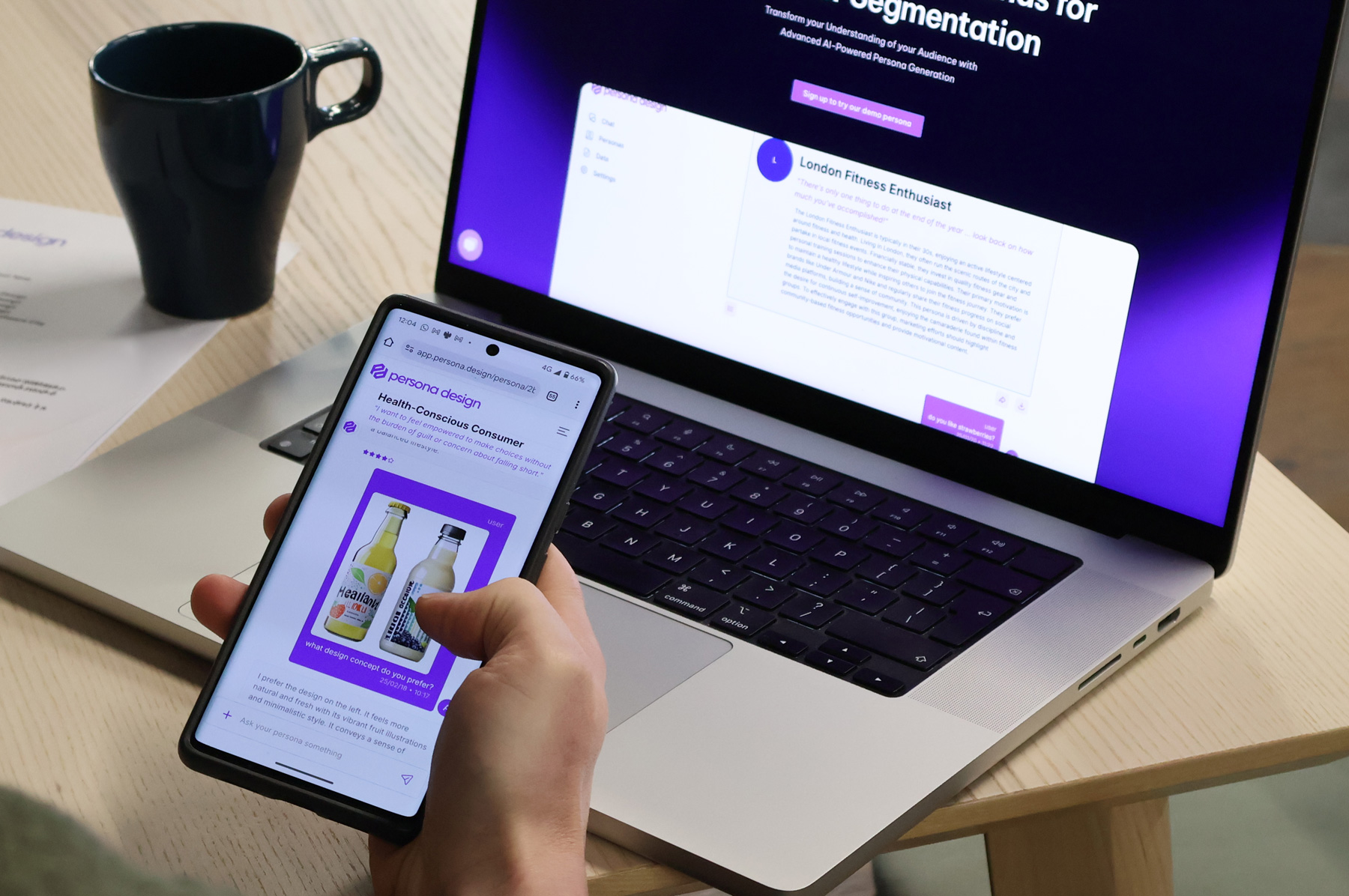
Persona Dynamics platform view on mobile

Ready to see it in practice?

Talk to us about your use case and how the platform can work with your evidence.